The Fox and the Cat’s partnership
The Adventures of PinocchioThe Fox and The Cat’s partnership is a traveling alliance built around deception, most consequentially when the pair draw Pinocchio into the promise of multiplying his money. Their first appearance makes the alliance visible in miniature: The Fox is lame, The Cat is blind, and they move along together, one leaning on the other. When they meet Pinocchio again after his own fortunes have changed, the performance has given way to real deprivation. Their reunion turns the partnership into a moral counterpoint to Pinocchio’s developing capacity for work, care, and judgment.
Identity and First Appearance
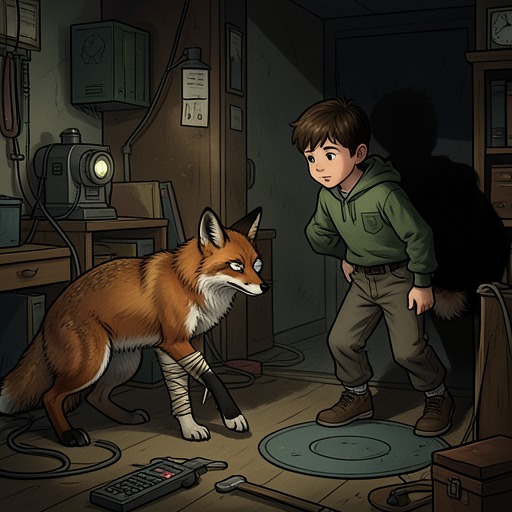
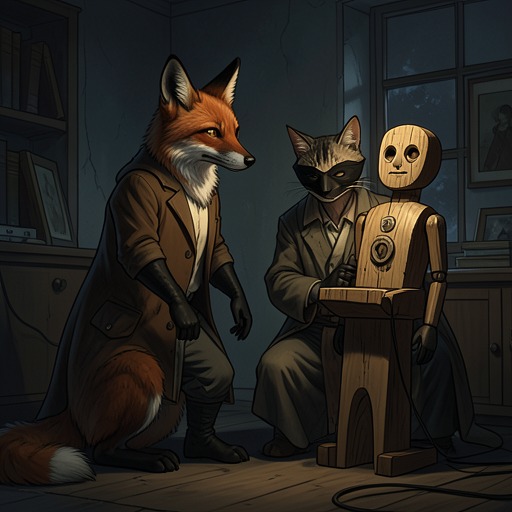
The Fox and The Cat enter the story as companions on the road. The Fox leans on The Cat, who guides him; their apparent impairments make them seem mutually dependent, while their easy movement together gives the pair the look of old friends. Their alliance is established through this physical arrangement before Pinocchio knows what they intend. Later, the account reveals that The Cat had only been pretending to be blind. The first meeting’s image of dependence is therefore also a disguise, though the pair’s association itself is genuine.
Pinocchio encounters them on his way home after receiving five gold pieces from Fire Eater. The money is meant for Geppetto, who had sold his only coat to buy Pinocchio an A-B-C book. That contrast gives the meeting its stakes: the coins represent Geppetto’s sacrifice and a chance for Pinocchio to return home with help for his father, while The Fox and The Cat become the companions who divert him from that purpose. Their partnership enters the plot at the point where Pinocchio must choose between responsibility and the lure of an easier fortune.
The Partnership’s Deception
The Fox and The Cat take Pinocchio to the Inn of the Red Lobster. Pinocchio later recalls that they ate there heartily while he was left alone; the shared journey does not amount to reciprocal friendship. The episode exposes a pattern that defines the relationship: the pair can present themselves as companions to Pinocchio while leaving him to bear the consequences of trusting them.
Their most consequential deception concerns the Field of Wonders. The Fox and The Cat persuade Pinocchio to bury his gold pieces in the hope that the money will multiply. Pinocchio follows their scheme, but when he returns, the promised wealth is absent. In his later account to Geppetto, he recalls finding none of the riches he expected. The partnership thus converts Pinocchio’s money into a lesson in misplaced trust; its promise of effortless gain stands opposite the steady, difficult work he eventually undertakes to support his father.
The relationship is not presented only through the mechanics of the scheme. Pinocchio later calls The Fox and The Cat false friends and recognizes that they cheated him. The wordless contrast between their shared travels and their abandonment of him at the inn makes that judgment concrete. Their alliance with one another is durable enough to carry them through repeated encounters, but their apparent friendship with Pinocchio is instrumental: he is useful to their fraud, not protected by their companionship.
Pinocchio’s Recollection and Changed Judgment
When Pinocchio finds Geppetto inside the Shark, he recounts the chain of misfortunes that began after Geppetto sold his coat. In that compressed history, The Fox and The Cat are part of a succession of diversions and dangers: the inn, the loss of the money at the Field of Wonders, and the consequences that followed. The recollection places their deception within the larger distance between the father’s original sacrifice and the son’s repeated failures to honor it. It also shows that Pinocchio can now name the pair’s role in his troubles rather than treating their promise as trustworthy.
Their final meeting tests that recognition in action. After escaping the Shark, Pinocchio and Geppetto are seeking shelter and food when they see two rough-looking beggars. Pinocchio recognizes them as The Fox and The Cat, now so altered by misery that they are difficult to identify. The Cat, who had pretended to be blind for years, has actually lost the sight of both eyes. The Fox is old, thin, nearly hairless, and without his tail; he had sold it for a bite to eat. The figures who once traveled together under the appearance of mutual assistance are now visibly impoverished, and their former deception has not secured lasting prosperity.
Reversal and Significance
The Fox and The Cat ask Pinocchio for alms, presenting themselves as old, tired, sick, and starving. Pinocchio refuses. He reminds them that they cheated him and says that stolen money does not prosper. His answer is not simply a refusal of charity: it marks a reversal in who can judge the encounter. Earlier, The Fox and The Cat exploited Pinocchio’s credulity; now he recognizes them, understands their appeal, and chooses not to be drawn in again.
That refusal contrasts with Pinocchio’s own later acts of help. He rescues Alidoro from drowning after recalling Geppetto’s teaching that a kind deed is never lost. He works for more than five months to bring warm milk to Geppetto, makes and sells baskets, builds a rolling chair for his father, and studies in the evenings. When he learns that The Fairy with Azure Hair is ill and poor, he gives the Snail his fifty pennies, the savings he had intended to spend on clothes. These actions establish a distinction between kindness freely offered and money obtained through deception. Pinocchio can refuse The Fox and The Cat without abandoning compassion as a principle: he directs his limited resources toward people to whom he owes care or gratitude, rather than returning them to the companions who once cheated him.
The partnership therefore helps frame Pinocchio’s moral change through repeated contrasts: apparent disability against genuine need, a promised multiplication of money against labor and saving, and false friendship against care expressed through sacrifice. The Fox and The Cat remain a pair, but their final appearance gives no sign that their old alliance has rescued either of them from poverty. Their encounter with Pinocchio closes the earlier cycle of deception by showing that he remembers what happened and no longer mistakes shared travel or persuasive promises for loyalty.